
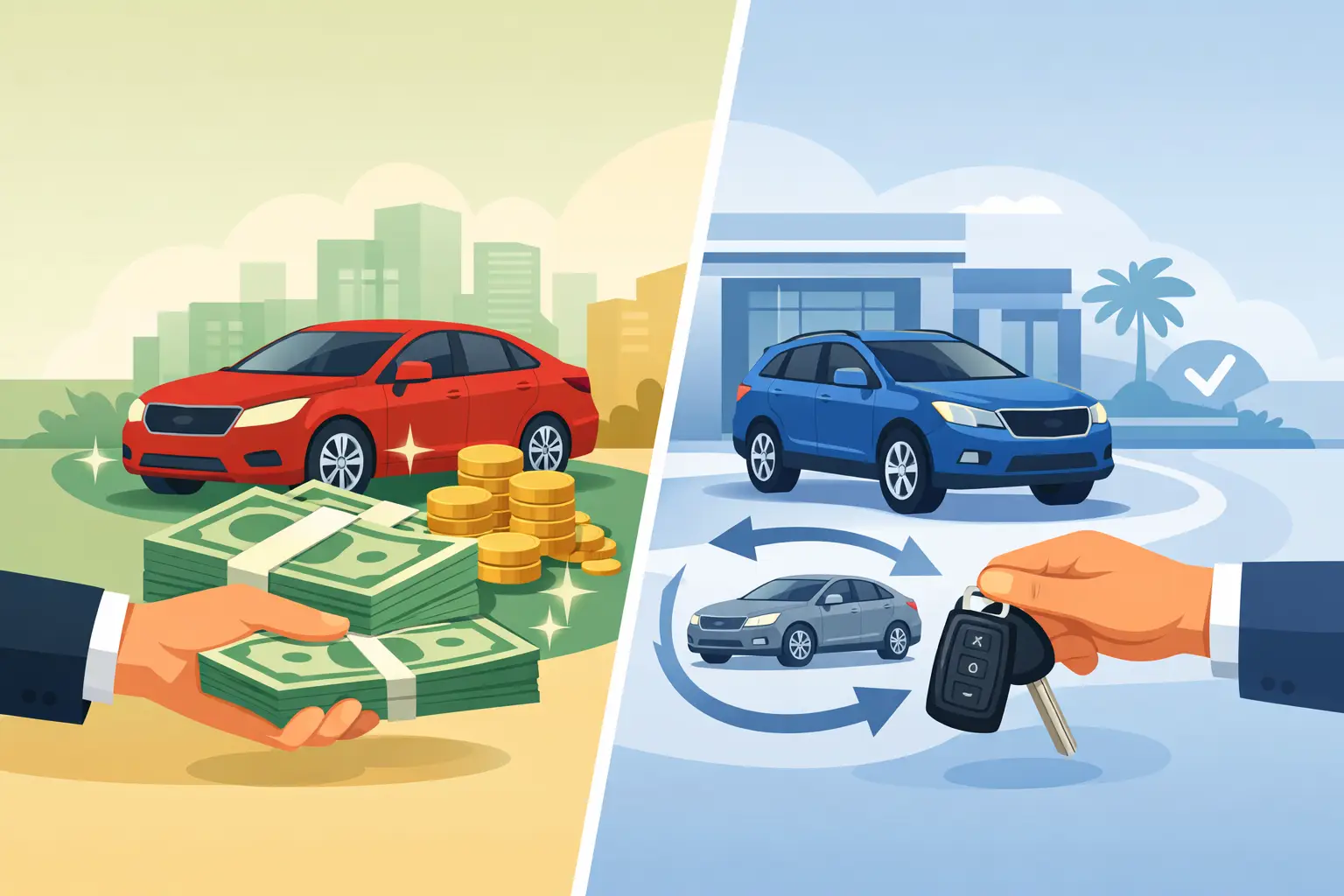
That old vehicle sitting in the driveway is costing you more than it looks. It takes up space, leaks fluids, loses value, and keeps becoming tomorrow’s problem. When people compare cash for cars versus trade in, they usually want one simple answer – which option gets more money in your hand with less hassle.
The honest answer is that it depends on the vehicle, your timeline, and how much work you want to do. If the car still runs well, looks decent, and you were already planning to buy another vehicle from a dealer, a trade-in can make sense. If the vehicle is damaged, dead, high mileage, unwanted, or not worth repairing, getting cash directly from a buyer is often the faster and cleaner move.
Cash for cars versus trade in: the real difference
A trade-in is tied to buying another vehicle. You bring your current car to a dealership, they inspect it, and they apply a value toward your next purchase. It feels convenient because everything happens in one place, but the offer is part of a bigger sales deal. That means the numbers can get blurry fast.
Cash for cars is a direct sale. You sell the vehicle to a buyer who wants it as-is, and you get paid without needing to shop for another car. For people with junk cars, wrecked trucks, dead vans, old RVs, or commercial vehicles that are just taking up room, this route cuts out a lot of back and forth.
That difference matters. With a trade-in, your current vehicle becomes one piece of a dealer negotiation. With a cash sale, the vehicle itself is the deal.
Which option usually pays more?
If your vehicle is in strong condition, a trade-in might offer a fair number, especially if the dealer wants your make and model for resale. That said, dealerships still need room for profit. They may recondition the vehicle, market it, finance it, and sell it again at a margin. Their offer reflects that.
With an unwanted or rough-condition vehicle, the trade-in number can drop hard. Dealers are not eager to take on a car with engine trouble, body damage, missing parts, title issues, or major wear unless they can bury the value inside another deal. In some cases, they may not want it at all.
That is where cash buyers often reign supreme. A direct vehicle buyer is focused on purchasing the unit quickly, often as-is, and arranging pickup. If the car is junk, non-running, wrecked, or simply not dealership material, a direct cash offer is often more realistic than a trade-in offer. The same goes for larger vehicles like trailers, buses, work trucks, semi-trucks, and RVs. Many dealerships are not interested in those unless they fit a very specific resale lane.
The key point is simple: clean, late-model vehicles have more trade-in potential. Older, broken, or specialized vehicles usually perform better in the cash-for-cars lane.
Why speed changes the decision
A lot of sellers focus only on top-dollar value and forget about time. Time matters. If you need that vehicle gone today, or you are tired of dealing with repairs, expired tags, towing headaches, or neighbors staring at the same clunker every morning, speed has value.
Trade-ins move at the pace of a dealership purchase. You still need to choose a replacement vehicle, negotiate financing or payment terms, and go through the usual sales process. That can be fine if you already planned on buying and have the time.
Cash for cars is built for speed. You call, get an offer, schedule pickup, hand over the vehicle, and get paid. For South Florida vehicle owners dealing with a dead car in Lake Worth Beach, a wrecked truck in Opa Locka, or an old trailer in Homestead, that kind of fast turnaround is not just convenient – it solves a real problem the same day.
Cash for cars versus trade in for junk and damaged vehicles
This is where the gap gets wide.
A dealer wants something they can retail, auction, or move with minimal trouble. A junk vehicle creates work. It may need towing, parts evaluation, mechanical repairs, body work, title cleanup, or disposal planning. Most dealers would rather avoid that unless they can offer almost nothing and still make the math work.
A direct buyer sees the vehicle differently. They expect rough condition. They buy units that do not start, do not drive, or do not make financial sense to repair. That changes the conversation from “Can this go on the front lot?” to “What is this worth right now, and how fast can we pick it up?”
If your vehicle has transmission failure, flood damage, collision damage, a blown engine, or years of wear, comparing offers still makes sense. But for many owners, the trade-in route turns into wasted time. They drive around chasing quotes only to hear that the vehicle is worth very little or nothing at all.
The hidden trade-off with trade-ins
Trade-ins feel easy because they are packaged with your next purchase. But convenience can come with a catch.
Dealers may give you one number for the trade and another number for the vehicle you are buying, then shift those figures during negotiation. A strong trade-in offer can be balanced by less flexibility on the purchase price of the next car. So while the trade-in looks attractive on paper, the total deal may not be as royal as it first appears.
That does not mean trade-ins are bad. It just means you need to look at the full transaction, not just the line item for your current vehicle. Ask yourself what you are really getting after purchase price, fees, and financing terms are all on the table.
A direct cash sale is usually cleaner. One vehicle. One offer. One pickup. One payment. That simplicity is a big reason so many people choose it when they want the problem gone without playing number games.
When cash for cars makes the most sense
Cash for cars is usually the stronger move when the vehicle is old, damaged, junk, non-running, or simply not worth the effort of private selling. It also makes sense when you do not want to buy another vehicle right away. You get paid and move on without being pushed into a larger purchase.
It is also a strong option for commercial and oversized vehicles. If you have an unused box truck, retired bus, broken trailer, work van, RV, or semi-truck, the average dealership is not set up for that kind of fast, direct purchase. A local buyer who handles pickup and pays on the spot is often the better fit.
For sellers who value speed over squeezing out every last dollar, this route delivers. You skip detailing, showings, lowball messages, and the guesswork of whether anyone will actually show up.
When a trade-in still deserves a look
Trade-ins are worth considering if your vehicle is in decent shape and you are replacing it immediately. Some owners also like the tax advantages that can apply in certain situations, depending on where the sale happens and how the transaction is structured.
If the car is newer, clean, and easy for a dealer to resell, you may get a reasonable offer without much effort. Just be careful not to confuse a smooth sales pitch with a better overall deal. Always compare the real numbers.
If you have time, get both quotes. See what a direct buyer offers and see what a dealer offers. The better choice usually reveals itself quickly.
What South Florida sellers should think about first
In South Florida, heat, humidity, flooding, and hard daily use can age a vehicle fast. That matters when comparing cash for cars versus trade in. A car that looks fixable to an owner may look like a liability to a dealer. Add towing costs, storage issues, HOA complaints, or a vehicle blocking your business lot, and waiting around starts to feel expensive.
That is why local service matters. A buyer who knows the area, can dispatch quickly, and handles pickup without delay saves more than time. They save stress. For sellers from Lake Worth Beach to Homestead, the best deal is not always the one with the prettiest presentation. It is the one that gets the vehicle gone and cash in your hand without dragging the process out.
Junk Auto Kings built its reputation around that exact need – fast offers, fast pickup, and the kind of royal treatment busy owners actually remember.
If your vehicle still has solid resale value and you are already shopping at a dealership, a trade-in may work. If it is junk, damaged, unwanted, or just taking up room, a direct cash sale usually wins on speed, simplicity, and less hassle. The smart move is the one that fits your vehicle as it sits today, not the one that sounds good in a showroom.
