
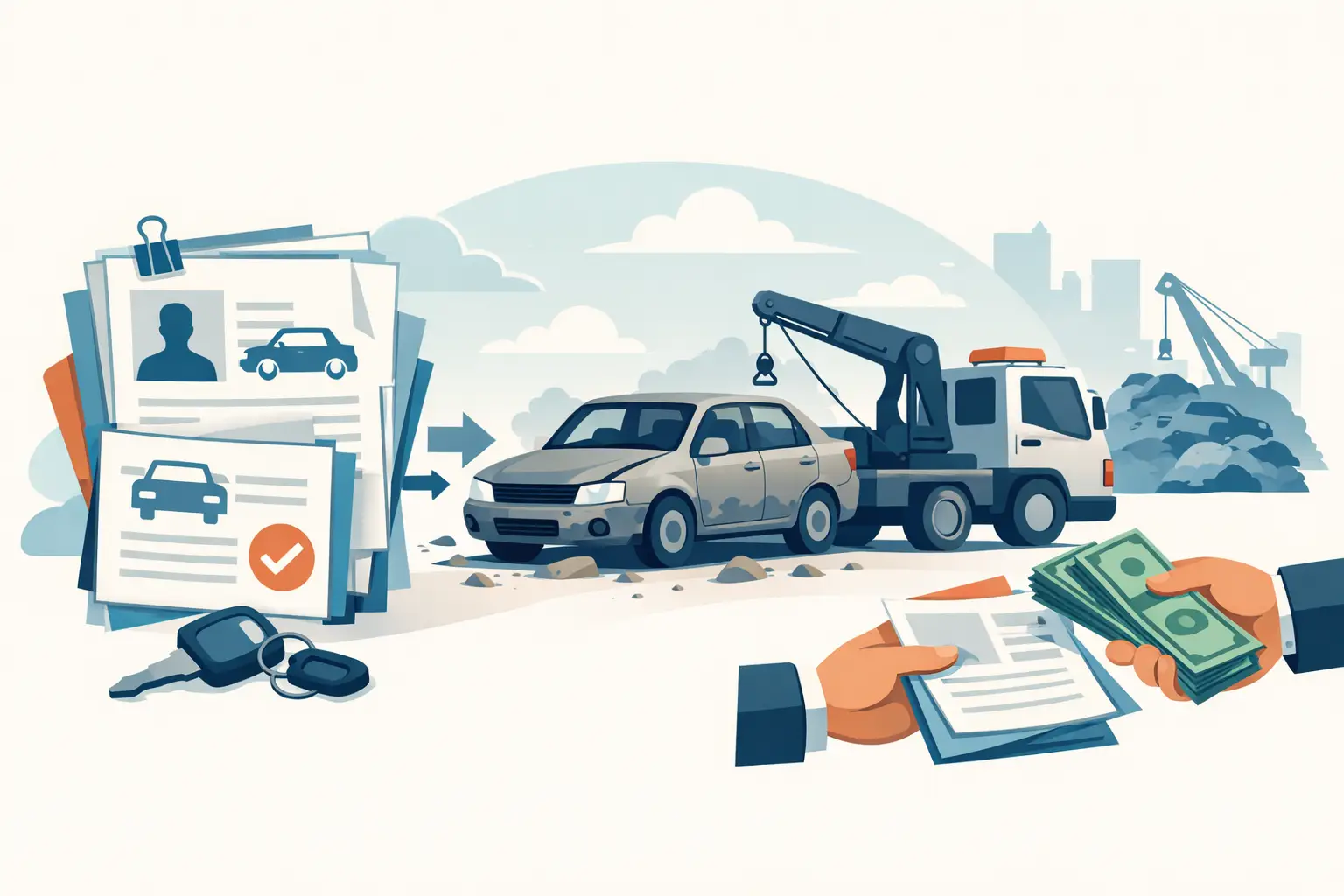
That dead car in the driveway is not getting more valuable by the week. If you are wondering what paperwork to junk a car, the good news is this – the process is usually simple when you have the right documents ready before the tow truck shows up.
For most South Florida vehicle owners, the paperwork comes down to proving two things: that the vehicle is yours and that you have the legal right to sell it. Once that part is clear, everything moves faster. That means less back-and-forth, quicker pickup, and cash in your hand without the usual headache.
What paperwork to junk a car usually means
When people ask what paperwork to junk a car, they are usually talking about the documents a junk car buyer needs before paying for the vehicle and hauling it away. In most cases, the main document is the vehicle title. That is the big one because it proves ownership.
You will also usually need a valid photo ID. Some buyers may ask for current or expired registration, especially if the title has an issue or if they need extra confirmation that the car belongs to you. Depending on the vehicle and the condition of the paperwork, there may also be a bill of sale or a release form involved.
The exact requirements can vary a little based on Florida rules, the type of vehicle, and whether the title is clean, lost, signed, or still tied to a lien. That is why a straight answer matters. Nobody wants a last-minute surprise when they are trying to turn a clunker into cash today.
The title is the crown jewel
If you have the title, you are in the strongest position. A title makes the sale smoother, faster, and easier to verify. For a standard junk car sale, the seller signs the title over to the buyer, and that is usually the key step that allows the transaction to move forward.
The name on the title should match your ID. If there are two owners listed, the way the names appear matters. If it says one owner “and” the other, both may need to sign. If it says “or,” one signature may be enough. That small detail can decide whether the pickup happens on the spot or gets delayed.
If the title is damaged but still readable, it may still work. If it is missing entirely, things get more complicated. Some buyers can still help in certain situations, but a title is always the fastest route if you want quick cash and a quick removal.
Do you need registration and ID?
Yes, you should expect to show a valid government-issued photo ID. This confirms that the person selling the vehicle is the same person listed on the title or otherwise authorized to sell it.
Registration is not always required when the title is clean and available, but it can help. Think of it as backup. If there is a typo, a question about the VIN, or an ownership issue, registration can support your claim and keep the deal moving.
If you still have old paperwork in the glove box, keep it handy. Insurance cards, repair invoices, or past registration documents are not always required, but they can sometimes help clear up questions fast.
What if you lost the title?
This is where people start to worry, and fair enough – a lost title can slow the process down. In Florida, a duplicate title may be needed before the vehicle can legally be sold in many cases. If you are the legal owner, you can typically apply for a replacement title.
That said, not every junk vehicle situation is the same. If the vehicle is very old, if it is being sold for parts or scrap under specific conditions, or if there is supporting ownership paperwork, the path may look different. Commercial vehicles, trailers, RVs, and larger units can also come with their own paperwork rules.
The smart move is to check before scheduling pickup. A quick call can save a wasted trip. If your paperwork is incomplete, say so up front. A serious local buyer would rather know the truth and tell you what is workable than show up and hit the brakes.
If there is a lien, do not ignore it
A lien means a lender or finance company may still have a legal claim on the vehicle. Even if the car is dead, rusted out, or not worth fixing, a lien can block the sale if it has not been released.
If you paid the vehicle off but never got the lien release recorded, you may need paperwork showing the lien is satisfied. If you still owe money, that becomes a different type of transaction, and not every junk buyer will handle it.
This is one of those it-depends situations. Sometimes the lien issue is easy to clear up. Sometimes it is not. But if there is a lien on record, it needs to be addressed before expecting a simple cash deal.
Selling a junk car for someone else
If the car belonged to a parent, spouse, business, or deceased relative, extra paperwork may be needed. Being in possession of the vehicle does not automatically give you the legal right to sell it.
For example, if the vehicle is owned by a business, you may need proof that you are authorized to act on the company’s behalf. If the owner has passed away, estate documents may be required. If you are helping a family member, a power of attorney may be necessary.
This is especially common with old trucks, trailers, RVs, and work vehicles that have changed hands informally over the years. The vehicle may be sitting on your property, but the paperwork still rules the road. If the ownership trail is messy, handle that first and save yourself the frustration.
What paperwork helps larger vehicles get sold faster
Junking a standard sedan is one thing. Selling a bus, semi-truck, trailer, box truck, or RV can involve a little more paperwork, especially if the unit was ever used commercially.
In those cases, title and ID still lead the way, but registration records, business ownership documents, lien releases, and unit numbers may also matter. Some larger vehicles have VIN plates in less obvious spots, and buyers may need clear documentation to match the paperwork to the unit being picked up.
If you own a commercial vehicle and want fast removal, gather every ownership-related document you have before making the call. That makes the quote more accurate and helps avoid delays once dispatch is on the way.
How to avoid delays on pickup day
Paperwork problems usually do not show up because the sale is impossible. They show up because details were skipped. A misspelled name, a missing signature, a title left in a drawer, or keys that cannot be found can all drag out what should be a fast job.
Before pickup, make sure the title is available, the seller’s ID is ready, and any co-owner knows if a signature is needed. Clear personal items out of the vehicle and make sure it can be accessed for towing. If the license plate needs to be removed under local rules, ask about that ahead of time.
Fast deals happen when everybody is ready. That is how local companies that reign supreme on speed can get a vehicle gone in less than an hour instead of turning it into an all-day hassle.
A simple checklist for what paperwork to junk a car
If you want the short version, have the vehicle title, a valid photo ID, and any supporting registration paperwork ready. If the title is lost, there is a lien, or the vehicle is owned by someone else or a business, expect extra steps.
That may not sound glamorous, but it is what gets you paid. The cleaner the paperwork, the faster the offer turns into pickup and cash.
In South Florida, speed matters. You do not want to chase forms for three days while a dead vehicle keeps taking up space. If you gather the ownership documents first and ask the right questions early, the whole process gets easier fast. That is the royal treatment people actually want – less talk, less waiting, and one less junk vehicle on the property by the end of the day.
