
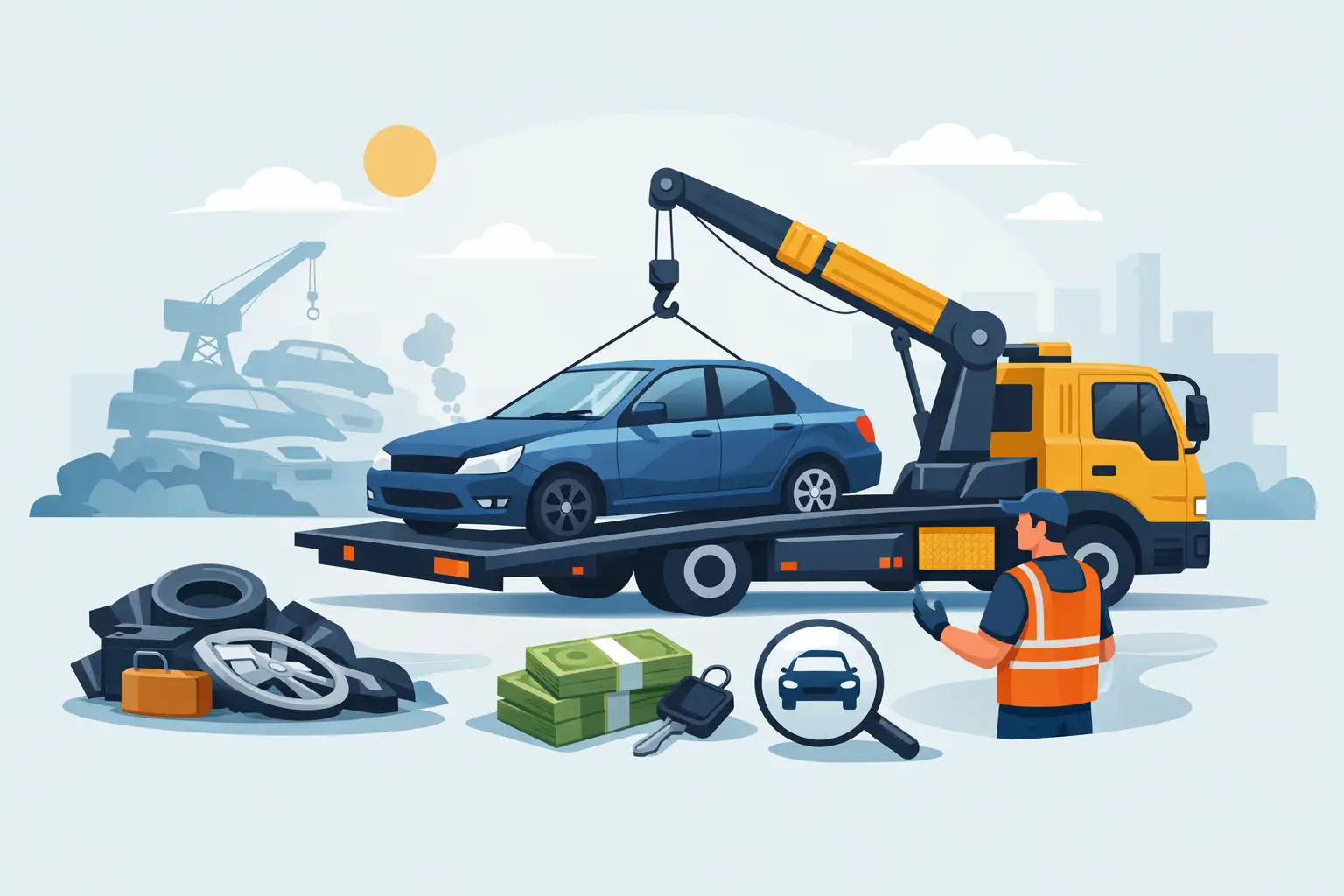
That dead car in the driveway is not getting more valuable by waiting. If you’re wondering how to junk a non running car, the fastest move is usually the simplest one – sell it directly to a local junk car buyer who can tow it, handle the basics, and pay you on pickup.
A lot of South Florida vehicle owners wait too long because they think a non-running car is harder to sell than it really is. It can feel like a headache if the engine is shot, the battery is dead, the transmission is gone, or the car has been sitting for months. But a car does not have to start, drive, or pass inspection to have value. It still has usable parts, scrap metal, and resale value depending on condition, make, model, and demand.
The real trick is not figuring out whether your vehicle has value. It usually does. The trick is knowing how to sell it without wasting a weekend chasing buyers, paying for towing, or dealing with people who promise one price on the phone and another when they show up.
How to junk a non running car without wasting time
If your goal is quick cash and fast removal, skip the private-sale fantasy. Most private buyers want a car they can test drive, inspect in detail, and negotiate down. A non-running vehicle does the opposite. It raises questions, creates towing problems, and narrows your buyer pool fast.
That is why most owners get better results by going straight to a junk car buyer. The process is built for vehicles that do not start, do not move, or are simply not worth repairing. In many cases, you call, share the vehicle details, get an offer, schedule pickup, hand over the paperwork, and get paid when the car is loaded.
That speed matters in South Florida, where space is limited and HOA pressure, landlord complaints, or city code issues can turn an old car into a bigger problem. If the vehicle is taking up room at your home, shop, lot, or commercial property, the value is not just in the cash. It is in getting it gone.
What affects the value of a junk car that won’t run?
A non-running car is not priced by guesswork. Buyers usually look at a mix of scrap value, parts demand, and vehicle specifics. The year, make, model, and trim all matter. So does whether the car is complete.
If the catalytic converter is still there, the wheels are on it, and major parts have not been stripped, that can help the offer. If the car was flooded, burned, wrecked, or missing major components, the value may be lower. Larger vehicles like trucks, buses, RVs, trailers, and semi-trucks can follow a different value range because they carry more metal, different parts demand, and heavier pickup logistics.
Location can matter too. A car that is easy to access in a driveway is simpler than one buried in a tight garage, stuck in mud, or parked in a way that needs special equipment. Honest details help you get a real number up front instead of a surprise discount later.
That is one reason local buyers tend to move faster and price more accurately. They know the market, the routes, and the realities on the ground from Lake Worth Beach down to Homestead.
The paperwork you usually need
The biggest reason people delay junking a vehicle is paperwork anxiety. They assume it will be complicated. Most of the time, it is not.
If you have the title, the process is typically smoother and faster. The title proves ownership and makes the transaction clean. If the title is missing, it does not always kill the deal, but it can slow things down because rules depend on the vehicle, your ID, and state requirements. Some buyers can still work with you, but they will want enough documentation to confirm the vehicle is yours to sell.
You should also be ready with your photo ID and basic vehicle information. That usually means the VIN, year, make, and model. If the registration is available, keep that handy too. It is better to ask what is required before pickup day than to find out at the last minute that something is missing.
If there is a lien on the car, that changes things. You generally cannot sell a vehicle you do not fully own yet without resolving the lien. This is one of those it-depends situations where being upfront saves time.
How the pickup process really works
A lot of people picture junk car pickup as a drawn-out towing appointment with a big waiting window. It does not have to be that way.
Once you accept an offer, pickup is usually scheduled based on your location and the vehicle type. Standard cars are one thing. Heavier commercial vehicles are another. But the basic flow is the same. The buyer dispatches a truck, confirms the details, arrives at the property, checks the vehicle, handles the handoff, and pays you.
If your car is boxed in, has no wheels, or is parked in a difficult spot, say that up front. It is not a deal breaker. It just helps the right truck show up the first time. Good junk car buyers want the pickup to be clean and fast, not a guessing game.
This is where a company like Junk Auto Kings can make the whole thing feel easy. For owners across South Florida, speed is the whole crown jewel – quick offers, rapid dispatch, and cash paid at pickup without making you chase a separate tow truck.
Common mistakes when junking a non-running car
People lose time and money when they treat a junk vehicle like a normal used-car sale. A dead car is not something most buyers want to haggle over in a parking lot.
One mistake is hiding the condition. If the motor is blown, say it. If it was in a crash, say it. If parts are missing, mention that too. The cleaner the information, the cleaner the offer.
Another mistake is paying out of pocket for towing before calling a buyer. Many sellers assume they have to move the vehicle first, but direct buyers often include pickup. If towing is already built into the deal, spending extra money first just cuts into your payout.
Some owners also forget to remove personal items. Check the trunk, glove box, center console, and under the seats. Old paperwork, toll transponders, garage remotes, tools, and license plates are easy to miss when a car has been sitting for a long time.
The last big mistake is waiting for the perfect offer on a vehicle that is only getting older, less complete, and more inconvenient. Sometimes holding out for a little more money costs you more in time, storage headaches, and stress.
How to junk a non running car for the best experience
If you want the process to go smoothly, think simple. Have your title or ownership documents ready. Gather the vehicle details. Be honest about the condition. Confirm whether towing is included. Ask when they can pick it up and when you get paid.
That last part matters. Some buyers make the process sound quick until payment becomes vague. A straight answer matters more than sales talk. If they buy junk vehicles every day, they should be able to explain the handoff clearly.
It also helps to work with a licensed and insured local buyer. That does not just sound good. It gives you more confidence that the pickup will be handled professionally, especially if the vehicle is on private property, in a tight spot, or part of a business fleet.
For owners of trucks, trailers, buses, RVs, or semi-trucks, choosing a buyer with experience in larger vehicles is even more important. Bigger units can require different equipment and more planning. You do not want to line up a pickup only to hear that the buyer cannot actually remove what they promised to buy.
Why local matters in South Florida
National chains can buy vehicles, but local service usually wins on speed. That is especially true when your car is not running and you need it off the property fast.
A local South Florida buyer understands the traffic, service routes, neighborhood access, and urgency behind calls from places like Opa-locka, Miami Gardens, Lake Worth Beach, or Homestead. If you need same-day pickup, local coverage is not a small detail. It is the difference between waiting around and getting paid.
There is also a trust factor. When a family-owned local business says it can pick up quickly, it has a reputation on the line in the same communities it serves. That tends to keep the process more straightforward.
A non-running car does not have to sit there another month while you debate your options. If it is dead, damaged, unwanted, or just taking up valuable space, the smart play is usually the fast one – get a real quote, line up pickup, and turn that clunker into cash so you can move on.
